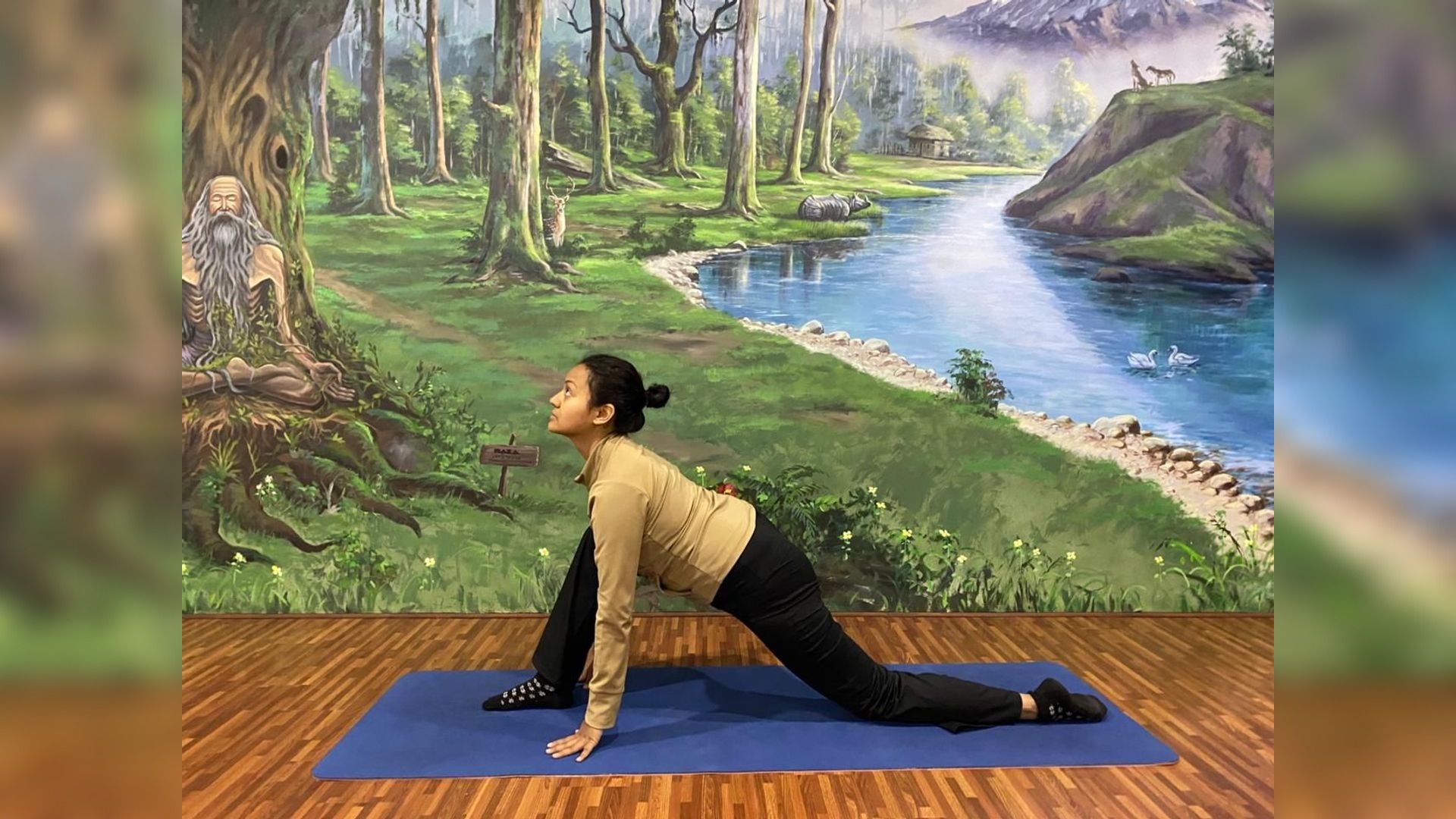
Sanskrit Name: अश्व संचलनासन (Ashwa Sanchalanasana)
English Name: Equestrian Pose
Pronunciation: AHSH-wah SAHN-chuh-lah-NAH-sah-nah
Steps to Perform Ashwa Sanchalanasana
- Starting Position: Begin in Adho Mukha Svanasana (Downward-Facing Dog Pose).
- Step Forward: Inhale and bring your right foot forward between your hands, aligning your knee directly above your ankle.
- Extend the Back Leg: Stretch your left leg back, keeping the knee lifted and the heel pressing backward.
- Open the Chest: Lower your hips gently toward the floor, lift your chest, and look forward or slightly upward.
- Hand Placement: Keep your fingertips or palms on the floor beside your front foot for balance.
- Hold the Pose: Stay in the position for 5–8 breaths, maintaining steady breathing.
- Switch Sides: Exhale and step back to Downward Dog, then repeat with the opposite leg.
Benefits
- Strengthens Legs and Core: Engages thighs, glutes, and abdominal muscles.
- Improves Flexibility: Deeply stretches hip flexors, groin, and psoas muscles.
- Enhances Balance and Focus: Improves coordination and body awareness.
- Opens the Chest: Expands lung capacity and improves breathing.
- Stimulates Abdominal Organs: Aids in digestion and circulation.
- Boosts Energy: Invigorates the body and prepares it for dynamic sequences like Surya Namaskar.
Things to Keep in Mind
- Keep the front knee directly above the ankle to avoid knee strain.
- Avoid collapsing the lower back—lengthen through the spine.
- Maintain even weight on both feet and avoid locking the back knee.
- Engage the core to support balance and protect the spine.
- Keep breathing slow and steady throughout the pose.
Variations and Modifications
- Beginner Support: Lower the back knee to the mat for stability.
- Chest Expansion: Interlace fingers behind the back and open the chest upward.
- Dynamic Version: Move gently forward and backward with each breath to warm the hips.
- Advanced Variation (Anjaneyasana): Lift both arms overhead, palms together, and deepen the stretch.
- Props: Use yoga blocks under the hands if reaching the floor is difficult.
Contraindications
- Avoid if you have recent knee, hip, or lower back injuries.
- People with balance issues should practice near a wall or use props.
- Avoid overextending the neck when looking upward.
Preparatory and Follow-Up Poses
Preparatory Poses: Adho Mukha Svanasana, Anjaneyasana, Uttanasana
Follow-Up Poses: Parvatasana, Virabhadrasana I (Warrior I), Paschimottanasana
Energetic and Symbolic Aspects
- Chakra Activation: Stimulates the Manipura Chakra (Solar Plexus) — the center of willpower, confidence, and determination.
- Symbolism: Represents readiness and forward movement, embodying courage and balance like a warrior preparing for the next step.
- Encourages grounding through the legs and openness through the heart, balancing stability and expansion.
Recent Blog Posts
Why Staying Silent While Eating Is Important?
Jan 04, 2026
Soham Meditation: Connect with Your True Self
Dec 21, 2025

Vegetarian Sources of Good Fats
Dec 03, 2025