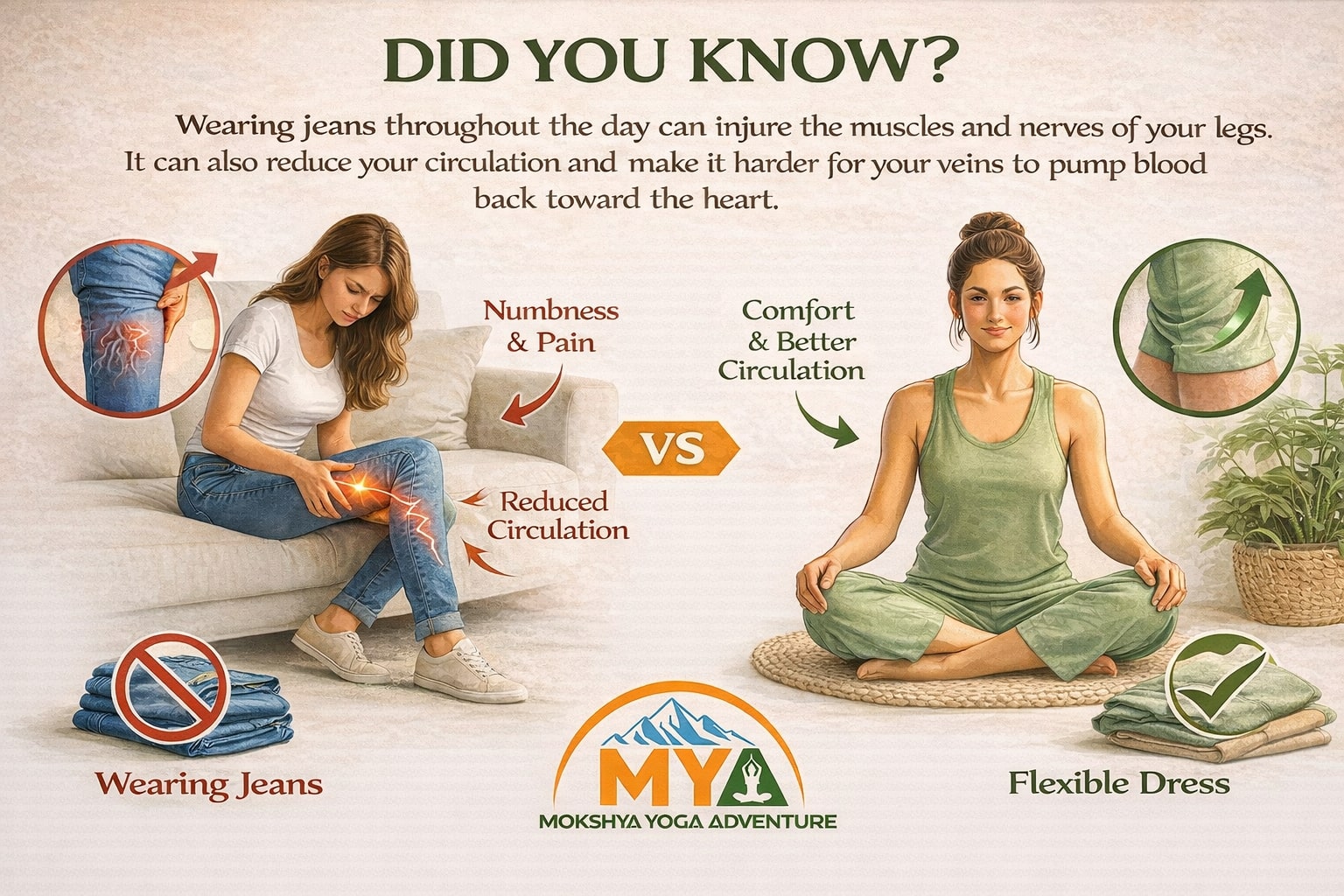
Yoga teaches us that health is not created only through postures and breathing practices. True wellbeing is shaped by our daily lifestyle choices—how we wake up, eat, sit, move, breathe, and yes, even how we dress.
In today’s fast-paced world, tight and fitted clothing—especially jeans—has become a daily habit. While such clothing may appear stylish, yoga and Ayurveda invite us to look deeper and ask a simple question:
Does what I wear support the natural intelligence of my body?
The Body as a Flowing System of Energy
According to yogic science, the human body is a living pathway of Praṇa, the life force that sustains vitality, clarity, and balance. Praṇa flows through subtle channels known as Naḍis, and its smooth movement keeps the body light and the mind calm.
The legs, hips, and lower abdomen are governed by Apana Vayu, the downward-moving energy responsible for grounding, elimination, circulation, and stability. When this area is constantly compressed by tight clothing, the flow of Apana Vayu may become disturbed.
Over time, this disturbance can quietly express itself as:
- Heaviness in the legs
- Fatigue after long hours
- Reduced comfort while sitting or walking
- A sense of restlessness or dullness
Yoga reminds us that restriction in the body often becomes restlessness in the mind.
What Ayurveda Says About Tight Clothing
Ayurveda views health through the balance of three doṣhas: Vata, Pitta, and Kapha. Restrictive clothing affects each doṣha in a unique way.
Vāta Doṣha – Movement & Nervous System
Vāta governs circulation, nerves, and movement.
Tight clothing can:
- Compress nerves
- Disturb circulation
- Increase dryness and stiffness
Vāta-dominant individuals may notice tingling, numbness, discomfort, or uneasiness after wearing tight jeans for long hours.
Pitta Doṣha – Heat & Circulation
Pitta governs metabolism, blood flow, and body heat.
Tight clothing can:
- Trap heat
- Restrict blood movement
- Create irritation in tissues
This may show up as warmth, burning sensations, irritation, or restlessness—especially in warm climates or stressful routines.
Kapha Doṣha – Stability & Structure
Kapha provides strength, lubrication, and endurance.
When Kapha is restricted:
- Circulation slows
- Lymphatic movement reduces
- Heaviness increases
Kapha-dominant individuals may feel swelling in the legs, lethargy, or dullness when wearing tight clothing continuously.
Clothing, Breath, and the Mind
Yoga recognizes the deep connection between breath and awareness. Tight clothing around the waist and hips may limit natural diaphragmatic breathing, encouraging shallow breaths. Shallow breathing keeps the nervous system alert and tense rather than relaxed and receptive.
This is why yogic traditions have always favored loose, breathable, simple clothing—not for appearance, but for awareness.
The classical yogic principle says:
“Sukham Asanam”
Whatever we choose should bring ease, not strain.
Simple Yogic Wisdom for Modern Life
Yoga does not ask us to reject modern clothing—but it invites conscious choice.
- Avoid wearing tight jeans for the entire day
- Choose flexible fabrics for long sitting hours
- Change into comfortable clothing at home
- Stretch, walk, and move regularly
- Listen to how your body responds
When the body feels supported, the mind naturally softens.
Yoga Begins in Awareness
Yoga is not limited to the mat. It lives in small, mindful decisions made every day. Clothing that allows freedom of movement supports better circulation, calmer breathing, balanced doṣhas, and a steady flow of praṇa.
Recent Blog Posts
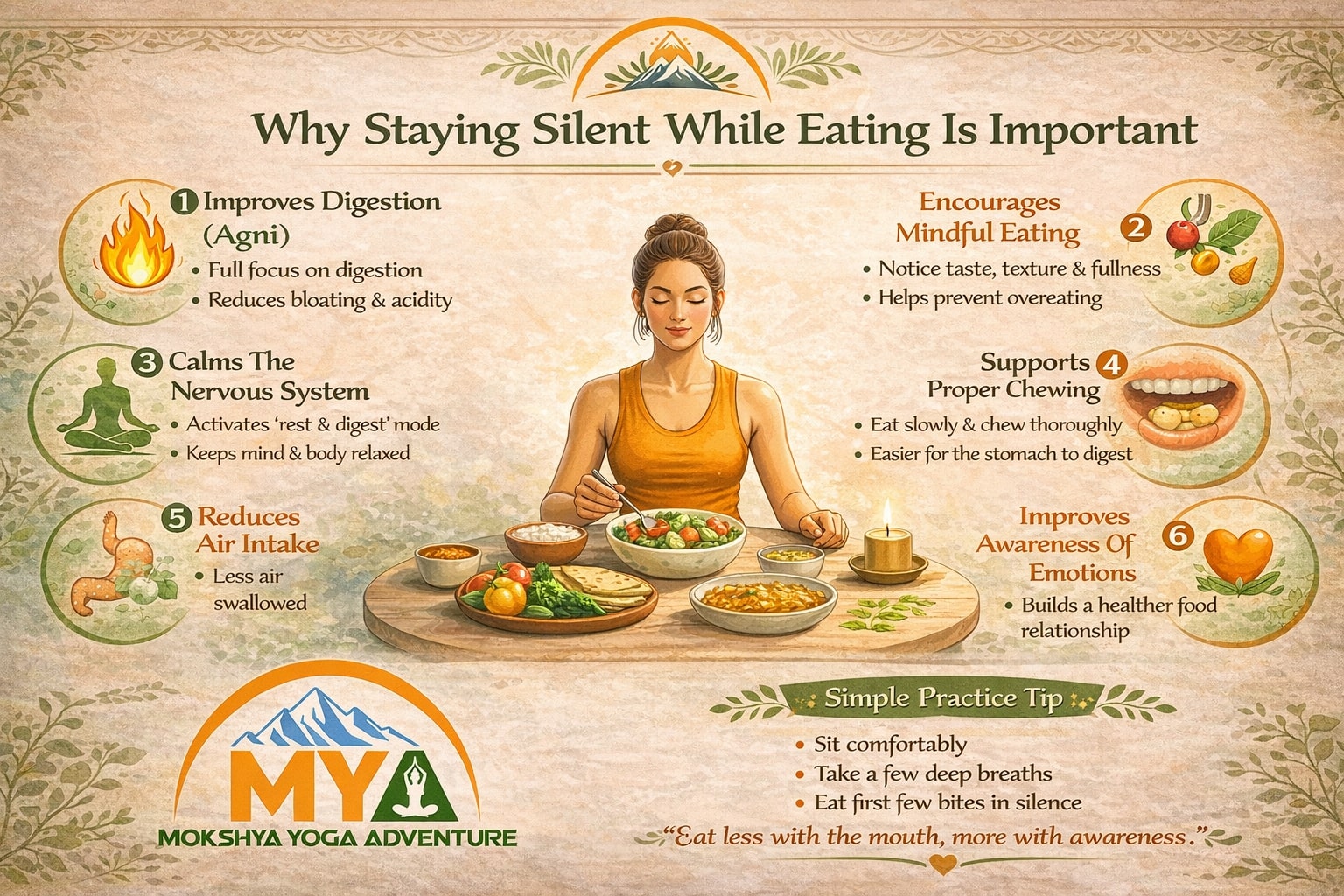
Why Staying Silent While Eating Is Important?
Jan 04, 2026

Soham Meditation: Connect with Your True Self
Dec 21, 2025

Vegetarian Sources of Good Fats
Dec 03, 2025